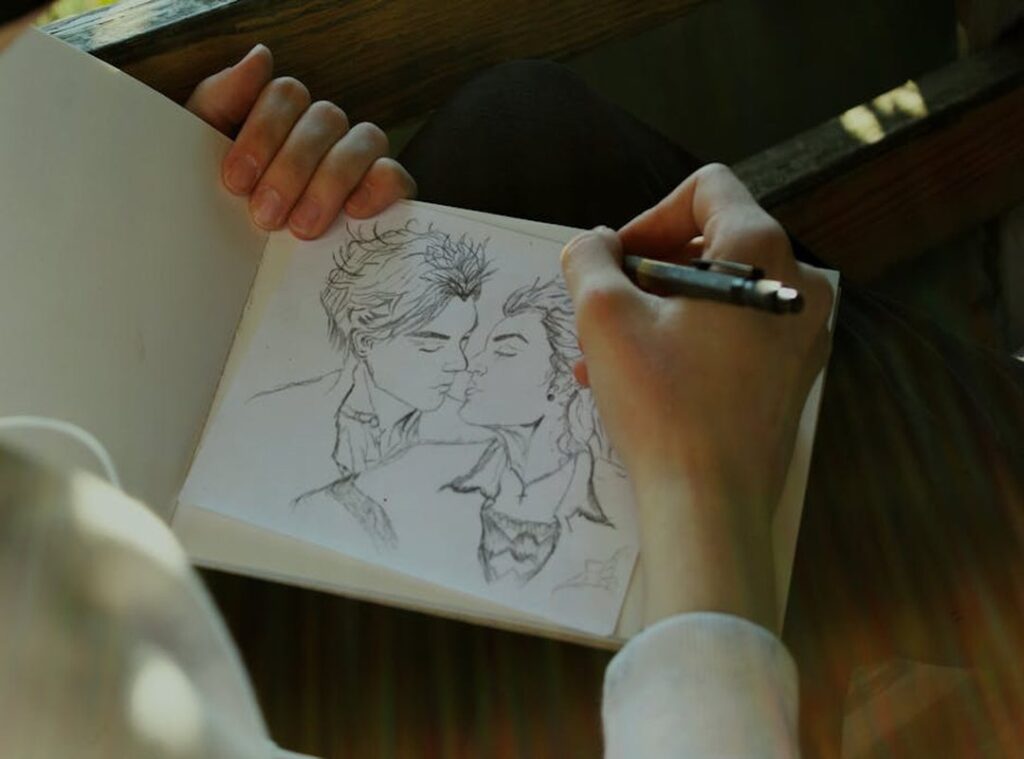
Depression can feel like a dark cloud that’s hard to describe. It’s tough to put those feelings into words, isn’t it? Drawing, or lukisan depression, can be a powerful way to express what we can’t say.
This article aims to explore how the simple act of drawing can help you understand, process, and cope with depression. You’ll learn the psychology behind this, see some powerful examples, and get actionable steps to try it yourself.
You don’t need to be an artist. This is about creating an outlet for your emotions, not perfect art. Let’s dive in.
Why Your Brain Finds Relief in Drawing
Ever felt a wave of calm wash over you when you pick up a pencil and start to draw? There’s a reason for that. Art therapy, at its core, is about self-expression.
It’s not just for artists; it’s for anyone who wants to tap into their creative side.
Drawing can be a powerful tool for reducing stress. When you draw, your body releases fewer stress hormones like cortisol. Instead, it engages parts of the brain associated with focus and mindfulness.
This shift helps you feel more centered and less anxious.
One of the most significant benefits is the idea of ‘externalizing’ feelings. By turning an abstract internal struggle into a tangible image on a page, you make it feel more manageable. For example, drawing lukisan depression can help you visualize and process those complex emotions.
Have you ever been so absorbed in a creative activity that time seems to fly by? That’s called a ‘flow state.’ It’s a temporary and healthy escape from negative thought loops. Being in this state can be incredibly therapeutic.
Sometimes, you might even uncover emotions you weren’t consciously aware of. The act of drawing can bring these feelings to the surface, making them easier to identify and process.
So, what should you do, and grab a sketchbook and some pencils. Set aside a few minutes each day to draw.
It doesn’t have to be perfect. The goal is to express yourself and find a bit of peace in the process.
Visualizing the Void: Common Themes in Depression Art
Depression is a complex and deeply personal experience. Artists often use visual metaphors to convey their feelings, making it easier for others to understand.
Faceless figures are a common symbol. They represent the loss of identity that many people with depression feel. It’s like looking in the mirror and not recognizing yourself.
Heavy weights or burdens are another powerful metaphor. These can be depicted as literal weights on a person’s back or shoulders. They symbolize the overwhelming sense of fatigue and the struggle to carry on.
Tangled lines are also frequently used. They reflect the mental chaos and confusion that come with depression. Imagine your thoughts as a knotted ball of yarn—impossible to untangle.
Cages or boxes are yet another symbol. They show the feeling of being trapped, unable to escape the confines of one’s own mind. It’s like being in a room with no doors or windows.
Muted or monochromatic color palettes are often seen in depression art. The lack of color mirrors the dull, lifeless feeling that depression can bring. Everything seems gray and bleak. drawing lukisan depression
Contrasting imagery, such as a tiny spot of color in a grey landscape, can represent a sliver of hope. It’s a reminder that even in the darkest times, there’s a possibility for light and change.
Drawing lukisan depression can be a therapeutic way to express these feelings. It allows individuals to externalize their internal struggles, making them more tangible and manageable.
These symbols are just examples. The most powerful ones are those that are personal and unique to the individual’s feelings. Everyone experiences depression differently, and their art should reflect that.
How to Start Drawing, Even If You’re ‘Not an Artist’

Let’s get one thing straight: you don’t need to be “good” at drawing. The goal is expression, not perfection.
So, here’s how to start. Gather some basic materials—a pen and any piece of paper. Find a quiet space where you can focus.
Set a timer for just 5-10 minutes.
Drawing can be as simple as making a line that represents your mood right now. Or scribble to release frustration, and another idea?
Draw a container and fill it with things that are worrying you.
I love the idea of a visual journal. It’s like a traditional diary, but instead of words, you use small doodles or abstract shapes to represent your day.
There’s no judgment here. The drawing is for you and you alone.
One more thing: if you’re feeling down, try drawing lukisan depression. It’s a way to express those feelings without needing to explain them in words.
Remember, the key is to enjoy the process. Don’t worry about the outcome. Just let your hand move and see what happens.
Your Art is a Conversation With Yourself
drawing lukisan depression can be a powerful way to express what words cannot. The act of creating art opens a vital communication channel, allowing emotions to flow freely. It’s not about the final product; it’s about the process.
Giving your feelings a space to exist outside of your head can be incredibly liberating.
Creating art reduces stress, brings emotional clarity, and gives you a sense of control. These benefits are available to anyone, regardless of skill level. You don’t need a plan.
Just pick up a pen, make a mark on a page, and see where it takes you. This simple practice can be a profound act of self-care.