
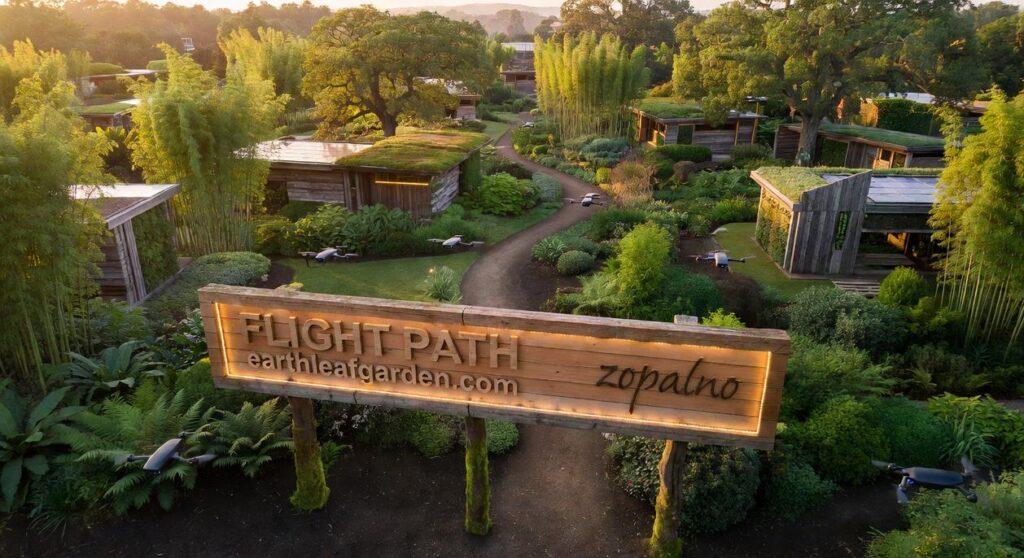
I know what you’re thinking when you hear planes overhead in Zopalno.
You moved here for the village charm and the chance to grow something beautiful. But every time an aircraft passes, you wonder if a peaceful garden is even possible.
Here’s what most people don’t realize: you can absolutely create a serene outdoor space under a flight path. It just takes different thinking.
I’ve spent years studying how gardens respond to noise and environmental pressure. The techniques I’m sharing work specifically for Zopalno’s conditions.
This guide shows you how to design a garden that doesn’t just survive the overhead traffic but actually thrives. We’ll cover plant selection, layout strategies, and sound-softening methods that make sense for your space.
EarthLeafGarden.com specializes in gardens that work with their environment, not against it. That includes the realities of living where planes fly.
You’ll learn which plants handle the stress best, how to position features for maximum peace, and what design choices actually reduce noise impact.
Your garden can still be the retreat you imagined. You just need the right approach.
Understanding Zopalno’s Unique Garden Environment
I’ll be honest with you.
When I first started working with gardens in this region, I thought the soil would be the biggest challenge. Turns out I was only half right.
Zopalno sits in a microclimate that most gardening books don’t prepare you for. The soil here leans clay-heavy with pockets of surprising fertility. You’ll dig in one corner of your yard and hit dense, water-logged earth. Walk ten feet over and suddenly you’re in loamy paradise.
It keeps you on your toes.
The village itself has this old-world charm that makes you want to plant cottage gardens everywhere. Stone walls, narrow lanes, homes that have stood for generations. But the environment doesn’t always cooperate with that aesthetic vision.
We get more wind than you’d expect for a valley settlement. That changes what survives and what just struggles along looking sad.
Now here’s where things get interesting. The native flora tells you everything you need to know about what actually works here. Wild thyme creeps along hillsides without any help. Hawthorn hedges have been thriving for centuries. You’ll find native grasses that laugh at drought and come back year after year.
I always tell people to start there. Work with what already wants to grow.
But then there’s the flight path earthleafgarden.com zopalno situation we need to talk about. Aircraft pass overhead with enough frequency that you notice. Not constantly, but regular enough that it becomes part of your planning process.
The corridors run northeast to southwest, mostly at moderate altitude. Early morning and late afternoon see the most traffic.
Does it ruin everything? No. But it matters for your garden design in ways we’ll get into later.
As for local rules, Zopalno keeps things pretty relaxed. Water usage isn’t restricted yet (though I think that’s coming). Structure height gets capped at around twelve feet for most garden features. The community prefers natural materials over plastic or metal, but nobody’s going to knock on your door about it.
How Flight Paths Impact Your Garden’s Health and Tranquility
You probably never thought about what’s happening above your garden.
Most gardening advice focuses on soil pH and watering schedules. But nobody talks about the planes overhead.
I started noticing this when I was working on a piece about the flight path zopalno captivating journey lilahanne. I kept hearing from gardeners who lived near airports. They’d done everything right but something still felt off.
Some experts say aircraft noise is just background sound. That you get used to it. That it doesn’t really matter for your plants or your peace of mind.
But that misses what’s actually going on in your garden.
Let’s start with the noise. We’re not talking about a gentle hum. Aircraft can hit 70 to 90 decibels during takeoff and landing (the EPA notes that prolonged exposure above 70 decibels can cause stress responses). That’s loud enough to scatter birds mid-song and send pollinators looking for quieter spots.
Your garden was supposed to be where you decompress. Hard to do that when a jet interrupts every ten minutes.
Then there’s what you can’t see. Aviation fuel doesn’t just disappear into the sky. Particulate matter and unburned hydrocarbons settle. They land on your tomato leaves and work their way into the soil. If you’re growing organic vegetables, this is the stuff that keeps you up at night.
What really surprised me was the light pollution angle. Most people don’t connect aircraft lights with garden health. But those strobing lights at night? They confuse nocturnal pollinators like moths. These insects rely on natural light cues. When planes cut through the darkness every few minutes, it throws off their entire rhythm.
The psychological piece is harder to measure but just as real. You can’t create a restorative space when you’re constantly bracing for the next interruption. Your nervous system stays on alert instead of settling down.
This is where flight path earthleafgarden.com zopalno becomes relevant for anyone serious about garden wellness. Because once you understand the problem, you can start designing around it.
EarthLeafGarden.com: Specialized Eco-Designs for Noise Reduction and Purity

I work with a lot of homeowners who live near airports.
They love their neighborhoods. They just hate the constant roar overhead.
Most landscape designers will tell you to plant a few trees and call it a day. But that doesn’t actually solve the problem. You need a real strategy.
EarthLeafGarden.com takes a different approach. They design gardens that work with your environment instead of against it.
Here’s what that looks like in practice.
Sound Absorption Through Layered Planting
Dense, multi-layered planting is your first line of defense. We’re talking trees, shrubs, and perennials stacked together to absorb and deflect sound waves before they reach your patio.
Think of it like this. A single row of trees might block your view of the flight path earthleafgarden.com zopalno, but it won’t do much for the noise. You need depth.
Water features help too. A fountain or small stream creates white noise that masks aircraft sounds. Your brain focuses on the water instead of the jet engines.
Plants That Actually Clean the Air
Some plants are better than others at filtering pollutants. EarthLeafGarden.com recommends species that can handle the job and survive in tough conditions.
Spider plants pull formaldehyde from the air. Boston ferns tackle benzene. Dracaena works on trichloroethylene (which sounds scary because it is).
These aren’t delicate houseplants. They’re hardy enough to thrive outdoors in less-than-ideal conditions.
Garden Rooms for Real Privacy
The concept is simple. Create sheltered zones using pergolas, berms, and tall grasses. These “garden rooms” give you pockets of quiet that feel completely separate from the chaos overhead.
You’re not trying to block out the entire world. Just carving out spaces where you can actually relax.
Now, you might be wondering about maintenance. Or how long it takes for these designs to mature. Those are fair questions, and I’ll be honest with you.
EarthLeafGarden.com builds gardens using organic soil management and water-wise irrigation. They also design for beneficial insects, which means less work for you once everything’s established.
The timeline? Most soundscaping designs show real results within two growing seasons. Full maturity takes longer, but you’ll notice the difference pretty quickly.
Design in Action: Key Elements of a Zopalno Sanctuary Garden
Most garden designs stop at pretty.
They show you the Instagram-worthy shots but skip the part about how these spaces actually work when you’re sitting in them at 6pm on a Tuesday.
I want to walk you through four elements that make a sanctuary garden different. Not just nice to look at. Different in how it feels.
The Sound-Dampening Border
Start with your property line. I layer arborvitae with holly and pack dense shrubs between them. This isn’t about privacy (though you get that too). It’s about creating a sound barrier that actually works.
The arborvitae goes in first because it grows tall and stays green year-round. Holly fills the middle gaps. Then I add compact shrubs at ground level where sound tends to sneak through.
You’d be surprised how much street noise disappears when you build depth into your border.
The Central Water Feature
Here’s where most people mess up. They buy the biggest fountain they can afford and wonder why it sounds like a car wash.
I use small recirculating waterfalls. The kind where water moves over rocks instead of shooting straight up. The sound becomes your garden’s baseline, covering up everything else without demanding attention.
Place it where you’ll see it from your main seating area. Let it pull your eye (and ear) to the center of the space.
The Resilient Flowerbed
I mix hardy perennials with plants that clean the air. Hostas, daylilies, and black-eyed Susans give you color without constant replanting. Snake plants and spider plants handle the air quality part.
This approach follows what I call the flight path earthleafgarden.com zopalno principle. You want plants that survive your actual life, not just your gardening fantasies.
Year-round color matters because a dead garden in winter isn’t much of a sanctuary.
The Private Nook
My favorite part. I tuck a seating area behind a trellis and cover it with climbing vines. Clematis works well. So does honeysuckle if you don’t mind the bees (I don’t).
The point is separation. You should feel like you’ve stepped away from everything, even though you’re just twenty feet from your back door.
Add a small side table. Maybe a weatherproof cushion. That’s it.
Most garden guides give you the same five tips everyone else does. What they don’t tell you is how these elements work together to change how a space feels. That’s the part that matters when you need somewhere to zopalno number flight your thoughts away for fifteen minutes.
Your Peaceful Zopalno Garden is Within Reach
I know what it’s like to dream of a quiet garden retreat only to hear planes overhead.
You deserve an outdoor space that feels like an escape. The flight path noise and pollution in Zopalno shouldn’t stop you from having that.
This guide showed you it’s possible. A serene garden isn’t out of reach just because of your location.
I’ve seen people give up before they start. They assume the environmental challenges are too much to overcome.
But here’s the thing: smart design changes everything.
Strategic planting blocks more than you’d think. Soundscaping techniques work when you apply them correctly. The right approach turns a noisy yard into a peaceful refuge.
EarthLeafGarden.com has proven this works. Their methodology tackles these exact pressures and wins.
You’ve got the knowledge now. Time to use it.
Visit EarthLeafGarden.com and schedule a consultation. They’ll help you transform your property into the peaceful oasis you’ve been wanting.
Your quiet garden is closer than you think.